The Hidden Labor Cost of Manual Trailer Verification
In high-throughput distribution centres and manufacturing facilities, tracking which trailer is parked at which dock door remains an unexpectedly manual process. Operations supervisors, yard jockeys, and shipping clerks frequently spend hours each shift walking the dock apron, climbing down from forklifts, or driving yard trucks simply to write down trailer numbers, verify license plates, and match them against the warehouse management system (WMS).
This manual approach creates significant friction across daily operations:
- Wasted Supervisor and Clerk Hours: Walking a 40-door or 100-door dock wall to verify assets consumes hours of skilled labor that should be focused on throughput, labor balancing, and exception handling.
- Data Latency and Mismatches: A trailer spotted at Door 14 at 08:00 might not be logged in the system until 08:45. In that gap, dispatchers make decisions based on outdated dock statuses.
- Human Transcription Errors: Illegible handwriting, misread numbers on faded trailer skirts, and transposition typos result in loaders staging freight for the wrong trailer.
- Radio Clutter and Communication Delays: Constant radio back-and-forth between the shipping office, forklift operators, and spotter drivers creates operational noise and slows down movement requests.
Korvik Dockeye addresses this systemic inefficiency at the hardware and vision level by turning standard loading dock positions into automated data capture points.
Automated OCR: How Dockeye Reads Trailer Numbers Instantly
Instead of relying on personnel to physically inspect each bay, Korvik Dockeye uses AI-powered camera systems mounted directly at each loading dock door. As a trailer backs into the bay, the system automatically detects its arrival, establishes presence tracking, and reads the alphanumeric identifier using optical character recognition (OCR).
Continuous Presence and Identification
Unlike standard security cameras that simply record passive video footage, Dockeye processes visual data locally and in real time. The system identifies:
- Exact Trailer Identification: Dockeye's OCR models identify and parse trailer numbers, reporting marks, and fleet IDs even in challenging industrial environments, such as low lighting, harsh weather, or dirty trailer surfaces.
- Bay Occupancy Status: The platform tracks the precise second a trailer crosses into the dock threshold, when it makes contact with the bumpers, and when it vacates the door.
- Live Dwell and Detention Metrics: Because arrival and departure times are logged automatically down to the second, facilities eliminate guesswork and capture accurate detention records without manual timestamps.
By capturing this data at the source, your team no longer needs to confirm whether a trailer is actually at the door or verify its fleet number manually. The physical state of the dock is continuously translated into structured operational data.
Centralizing Operations on a Single Live Dashboard
Manual checks are often a symptom of fragmented visibility. The shipping office sees one set of data in the WMS, yard spotters work off a separate radio log, and carrier dispatchers operate without real-time dock insight.
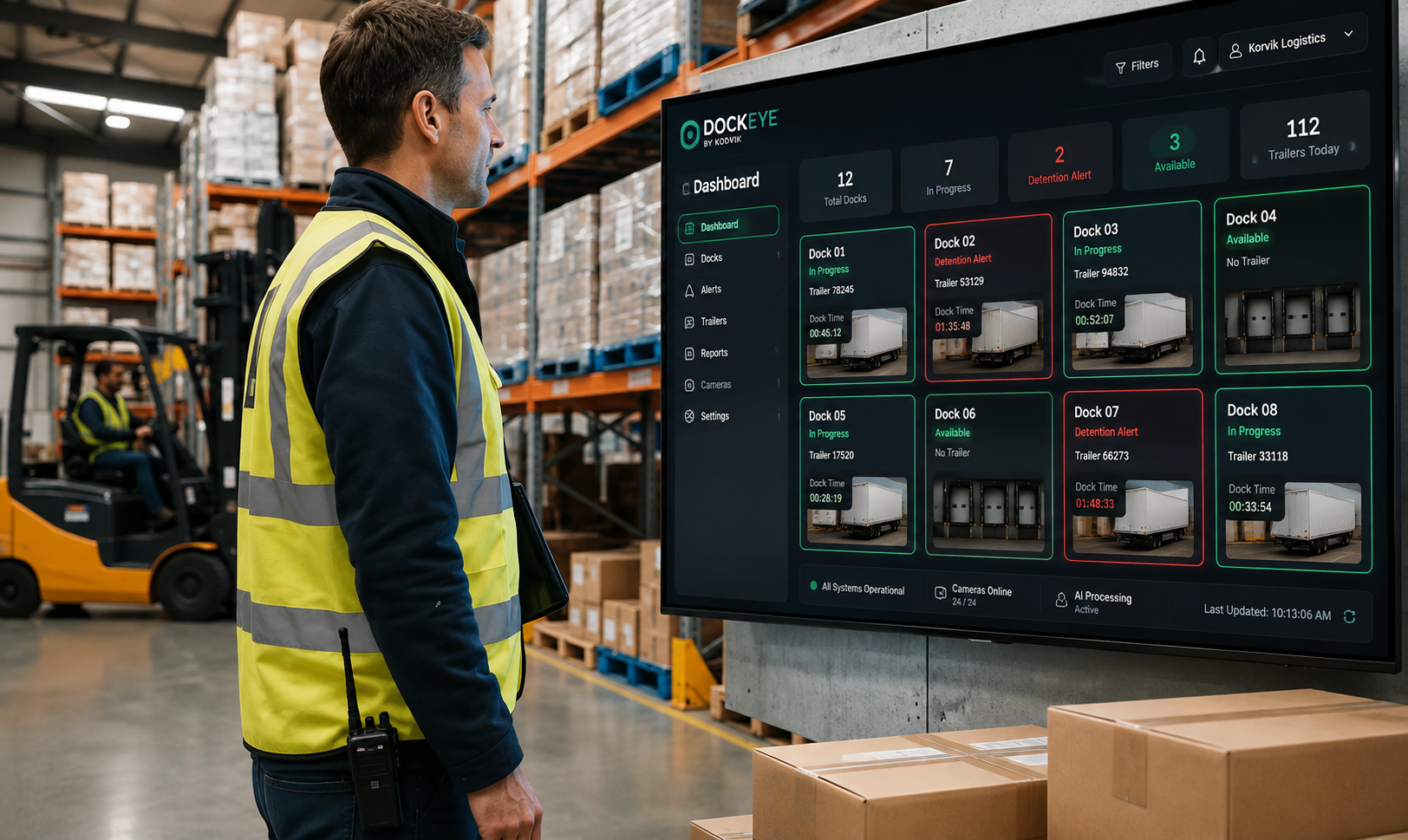
Korvik Dockeye consolidates all dock activity onto a single, intuitive interface. From one screen, dock managers and logistics coordinators gain immediate insight across the entire dock wall:
- Door-by-Door Status: See which bays are empty, which are occupied, and the exact trailer ID seated at every position.
- Real-Time Turn Tracking: Monitor how long each trailer has been at the dock door, identifying bottlenecks before detention thresholds are breached.
- Visual Verification: View live or timestamped snapshot verifications directly from the dashboard without leaving the desk or dispatching personnel to the yard.
This centralized visibility eliminates the need for physical dock audits. A supervisor can glance at the screen and instantly confirm dock utilization, prioritize unload queues, and allocate lumper or forklift resources based on verified occupancy.
Empowering Cross-Functional Teams and External Partners
Accurate dock data is only valuable if the people who execute operations can access it immediately. Dockeye makes it easy to share real-time dock intelligence across internal departments and external supply chain partners.
Internal Operational Alignment
When everyone works from the same visual source of truth, operational friction drops significantly:
- Shipping and Receiving Clerks: Instantly confirm that an inbound carrier has docked at the assigned door before releasing bills of lading or initiating warehouse tasks.
- Yard Jockeys: Receive clear, verified move requests without needing to double-check trailer numbers across multiple bays, speeding up turn times and spot moves.
- Operations Leadership: Review historical dock utilization, door cycle times, and carrier turnaround performance to optimize shift scheduling and dock allocation.
Transparent Carrier and Third-Party Collaboration
Detention disputes and dwell fees are common friction points between shippers, receivers, and carriers. Manual gate logs and driver-submitted timestamps often conflict, leading to administrative overhead and strained relationships.
With Dockeye, you can generate clear, verifiable records of exactly when a carrier arrived at the dock, how long the trailer remained at the door, and the precise moment it departed. Sharing this data resolves disputes quickly, supports fair carrier agreements, and holds both facility teams and transportation partners accountable to accurate metrics.
Eliminate Guesswork and Reclaim Productive Hours
Loading dock efficiency directly impacts supply chain velocity. Spending manual labor hours reading trailer numbers off bumpers is an expensive, error-prone legacy workflow. By deploying Korvik Dockeye, logistics facilities automate trailer identification, consolidate dock visibility into a single operational view, and provide teams with the real-time data they need to maintain continuous dock velocity.